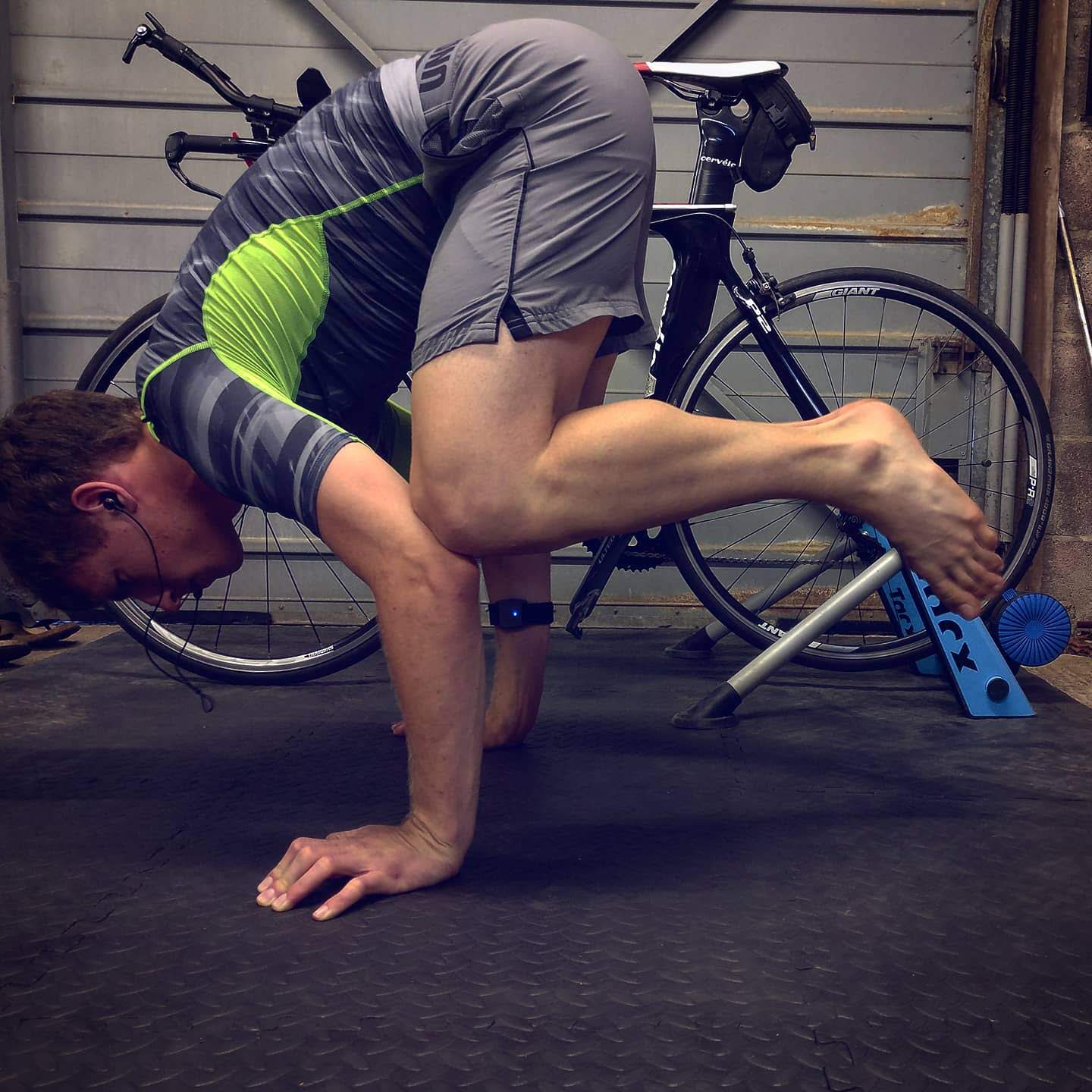
Last week I discussed the role of nutrition during Duathlon training, and how lockdown gave me the opportunity to hone in on this weakness. Moving on from nutrition is the art of effective recovery, a common misconception amongst athletes (those who know will know, those who don’t bare with).
Here’s a simple question for you to answer, when do you become stronger/faster? You’d think it was when you’re training, doing those 12*400m 5k pace efforts, 8*800m 10k pace efforts, or 1 hour of anaerobic threshold efforts, VO2 max sessions; however, it’s not, it’s really not. Training is when you stress you body out, up to the point that you’re severing muscle fibres because of the efforts you’re demanding. It’s hard, it’s very very hard. But, as a result, you don’t immediately become stronger or faster. In fact, the result can either be brilliant, of catastrophic.
There’s a famous cyclist (for those of you who don’t know), and his name is Chris Boardman. I’ve never met Chris, and I would very much like to, since he is a legend in cycling history (he still holds the record for cycling the furthest in an hour). When training to break the hour record, before the time when science became the lead for effective training, he was on the assumption that the more you trained you became a lot stronger and faster in a shorter amount of time. This is somewhat true, but up to a point.
He piled training on top of training. Cycling day-in, day-out, but his times were not getting faster, in fact, they were going the other way. His times becoming slower and slower, so he trained more and more. He then entered what sustainability science calls a “positive feedback loop”. Eventually, he did the one thing every athlete needs to actively avoid. He overtrained, and set back months of hard work. Why did this happen? Plain and simple, he didn’t listen to his body. After a much needed prolonged rest period, he attempted his hour record, and broke it (considerably). Annoyingly for him, the UCI (governing body of cycling) decided that his position on the bike gave him an unfair advantage (because the attitudes of said cycling body are archaic – if you gave them the opportunity to make the riders of the Tour de France to compete on Penny Farthings, I wouldn’t be surprised that they would actually consider it), therefore, it was an unofficial time – but he still has the world record, and in my mind, hasn’t been beaten.
So what went wrong for Chris? It was a common misconception that the more you trained, and the more training you piled on, the stronger and faster you became, but how does that work if you’re continually severing your muscles? The whole point of training is that you stress your body out severing your muscles therefore ensuring that they are mended probably, meaning that eventually, you will become stronger, and your muscle fibres bigger. This is why rest makes you rapid.
Yes, pushing yourself to stupid lengths during training will help you become stronger, but is only half of the picture. If you do not allow yourself to recover from said stress, you will overtrain, and cause major setbacks to your fitness. Lets give you an example. You’re driving up a hill. It’s a fairly steep hill. At the bottom you’re travelling at 60mph, then the speed limit changes to 30mph. You have 2 options. 1. You remain in 5th gear and hope your car will make it up the hill, 2. you change down to allow your car to recover to an easier state to give it it’s best chance of getting up. It’s the same with training. You either 1. push your limits to oblivion, and hope for the best, 2. ensure you push yourself but make sure your body repairs itself so it can endure more stress. This is the art of effective training. In sustainability terms (socio-ecological systems) it’s called resilience – not the resilience of bouncing back – but resilience being able to absorb changes and external stresses to ensure normal procedure continues – training and resting. Resilience (bouncing back) assumes you have overtrained, resilience (absorbtion) means that you have stressed your body, recovered, and stress it again. This is the feedback loop you’re aiming for, and the feedback loop that will ensure you’re ready for the race season ahead! (of course, you’re gains are also determined by quality and consistency of training – you obviously can’t do 1 week of training and then have the rest of the year off – this post looks at those who (like me) are training consistently – around 10+ hours a week).
This is where the saying, rest makes your rapid, comes in. Because, in reality, it does. If you didn’t rest, then how would you know that you’ve improved considering your muscle fibres are still broken?
Next time, when you’re doing a hard training session, think of how you feel afterwards, and how long you will need to ensure you muscles have fully repaired, ready to be pushed harder next time – of course, help your body repair by getting that food and quality post workout nutrition in you.
 duathlete.pete